
AfroRevivalism
RESEARCH · LAGOS, NIGERIA · ONGOING
Afrorevivalism explores how African architectural traditions can inform a contemporary design language without reproducing historical forms. Through research, drawing and speculative design, the work examines cultural memory, spatial systems, material traditions and symbolism as generative tools for architecture in Nigeria today
TOWARD A CONTEMPORARY AFRICAN ARCHITECTURAL LANGUAGE

01 / CONTEXT
Across many African contexts, spatial traditions were interrupted, reframed, or dismissed through colonial systems of development. Afrorevivalism responds by looking at forms of knowledge embedded in precolonial fabrication methods.
The project does not argue for a direct return to the past. Instead, it studies historical material as a generative system. Through drawings, speculative images, and spatial studies, the research asks how African design languages might be extended and made contemporary without being flattened into style.
02 / METHOD
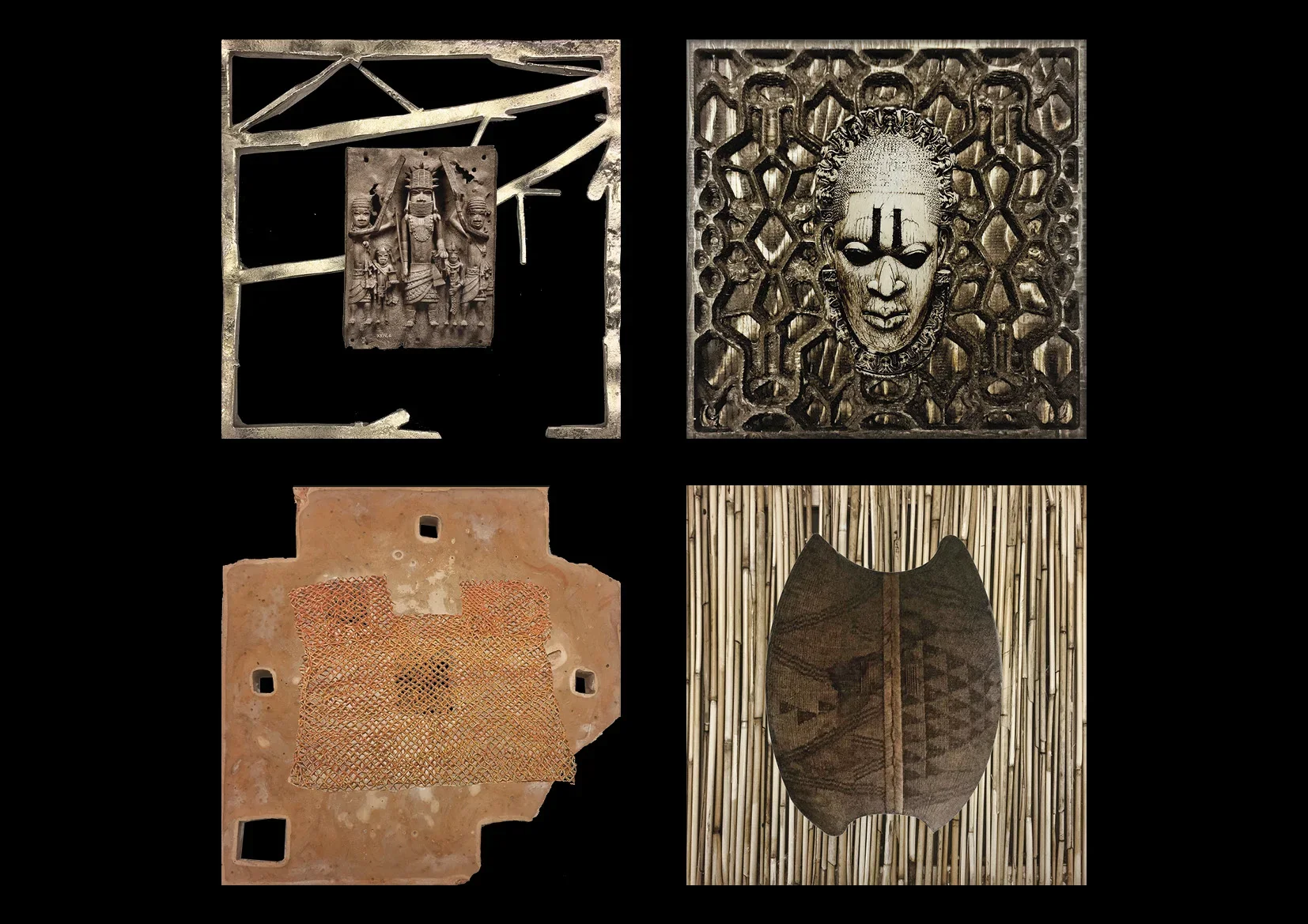
The methodology proceeds in two registers. The first is material, at the scale of the object. A series of column studies tested the formal and tactile possibilities of precolonial craft and material, working through bronze, carved wood, brick, and textile as alternative structural-ornamental languages.
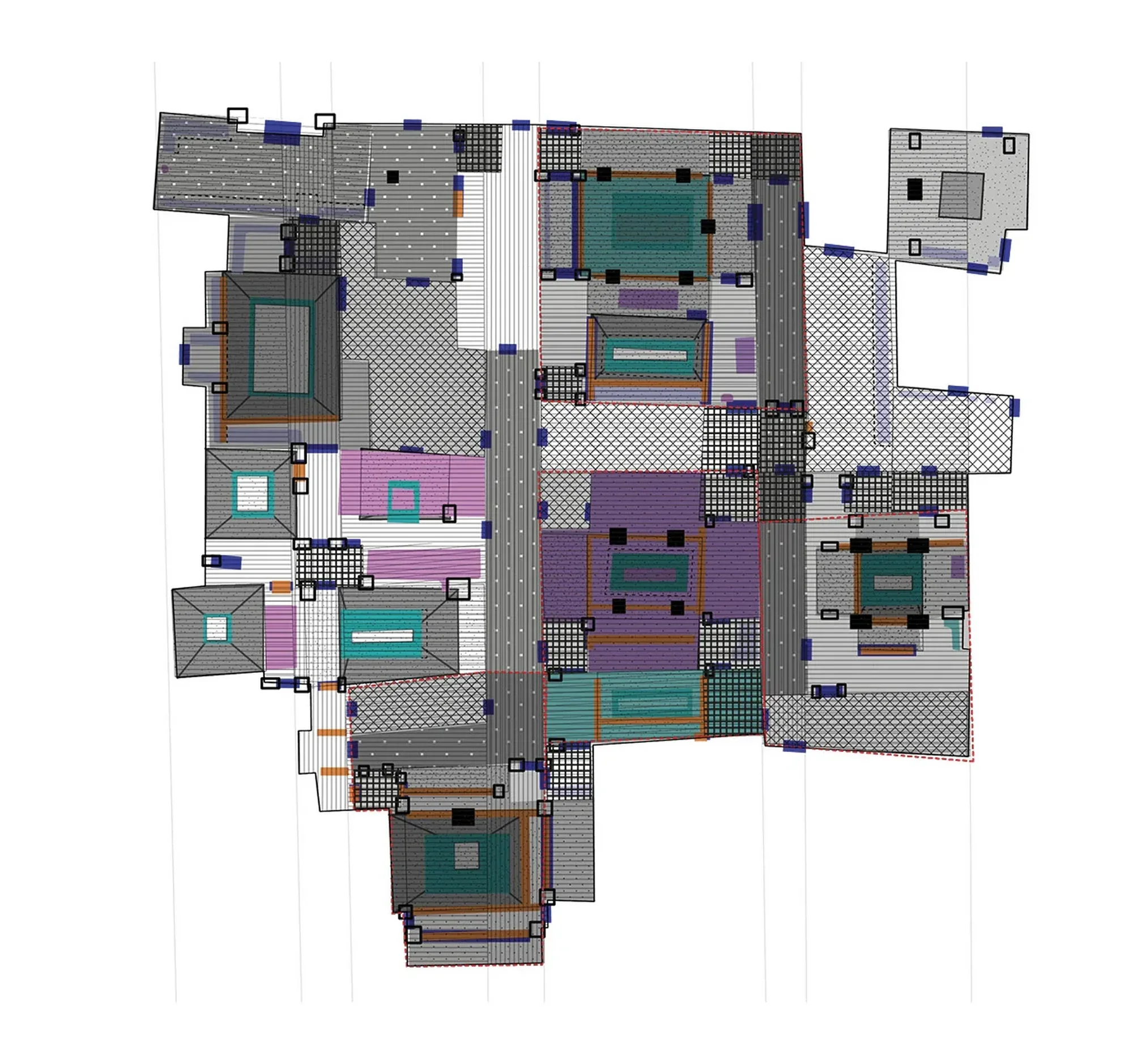
The second is spatial. Using the Oba’s Palace as a key precedent, the research catalogued spatial rhythms of interwoven courtyards, thresholds, verandahs, and adjacent public and private spaces.
03 / PROPOSITION
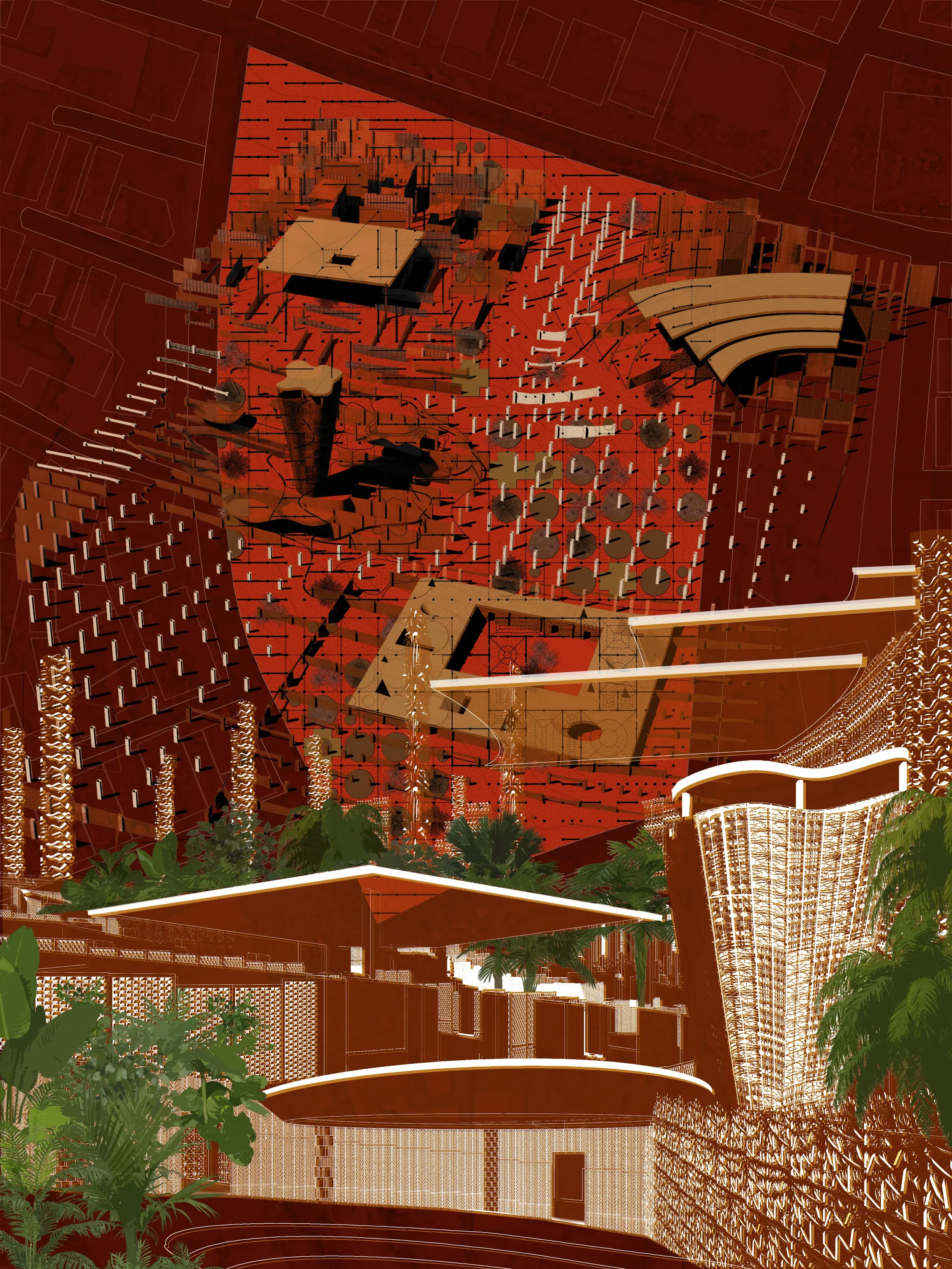
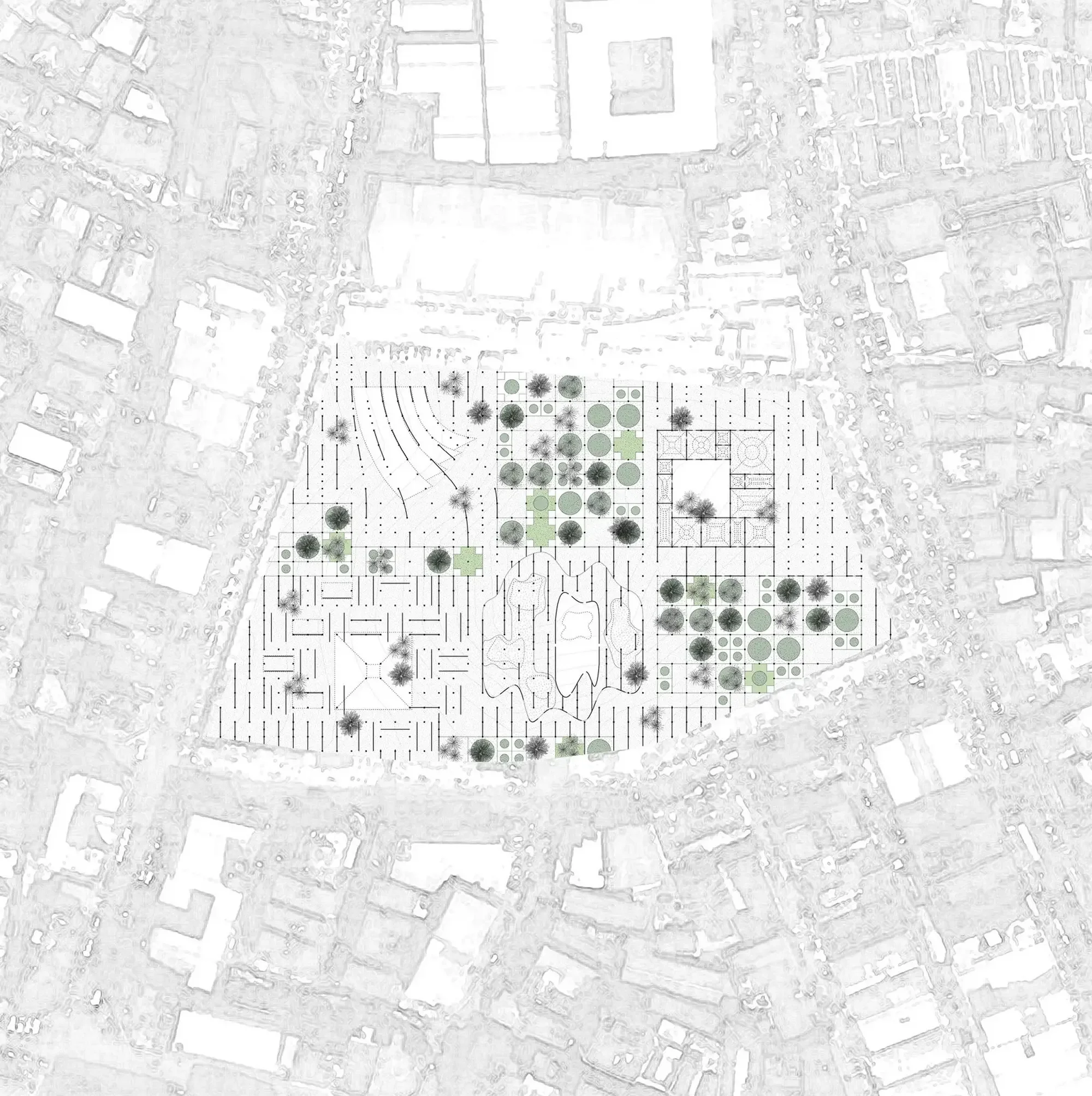
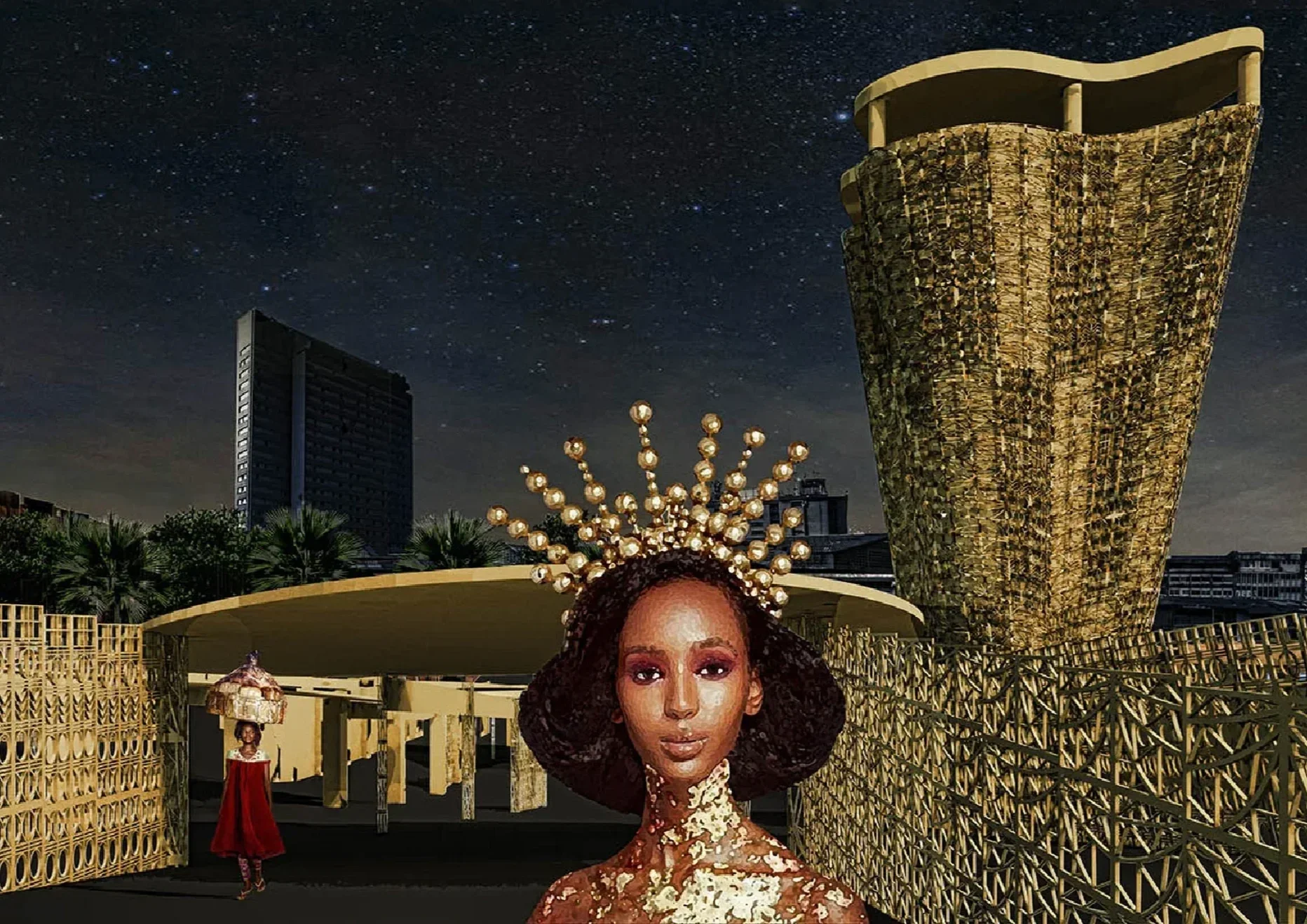
The People’s Palace is the project’s principal proposal: a civic complex sited within a dense Lagos neighbourhood. The architecture draws structural and decorative language directly from the material studies, with elements shifting scales throughout the site. Walls become low benches. Columns become stools. The palace is conceived not as a single monument, but as an episodic walk through a sequence of courtyards, pavilions, rooms, gardens, and gathering spaces.
Afrorevivalism sits between architecture, cultural research, and image-making. It offers a counter-proposal to two prevailing tendencies in African architectural discourse: the heritage approach, in which tradition is preserved as artefact, and the modernist tabula rasa, in which tradition is treated as an obstacle to progress. Instead, the thesis proposes a third path: tradition as a living, contemporary, generative material practice. The work is offered as a foundation for a Nigerian architecture that is both rooted in place and forward-looking, drawing its formal logic from the cultures, climates, crafts, and spatial traditions of its own territory.
Research
TYPE
Research | Masterplan | Civic
SCOPE
Lagos, Nigeria
LOCATION
The People's Palace
PRINCIPAL STUDY